8TH-GRADE SCIENCE
  • Home
    • Contact
    • Feedback
  • Course Information
    • Class Orientation
    • Class Overview
    • Class Policies
    • Goals & Outcomes
    • Grading
    • Textbook & Supplies
    • Student Tutorials
    • Parent Support
    • Assistive Technologies
    • ELL Support
    • Additional Information
    • State Standards
    • Teacher Resources >
      • Instructional Frameworks
  • Unit 1
    • Earth's Systems & Resources Overview
    • Module 1 >
      • Class Orientation
      • Class Policies
      • Google Classroom
      • "Netiquette"
      • Digital Portfolio
      • Lab Safety
      • Science Journal
    • Module 2 >
      • Physical Properties
      • Chemical Properties
      • Minerals
      • Ores
      • Fossil Fuels
      • Mineral Identification
      • [Module 2 - Assignments]
    • Module 3 >
      • Weathering
      • Erosion
      • Deposition
      • Landform Changes
      • [Module 3 - Assignments]
    • Module 4 >
      • Igneous Rocks
      • Metamorphic Rocks
      • Sedimentary Rocks
      • The Rock Cycle
      • [Module 4 - Assignments]
    • Module 5 >
      • Crust
      • Mantle
      • Core
      • Earth Layer Evidence
      • Seismic Wave Evidence
      • [Module 5 - Assignments]
    • Module 6 >
      • Divergent Plate Boundaries
      • Convergent Plate Boundaries
      • Transform Plate Boundaries
      • Theory of Plate Tectonics
      • [Module 6 - Assignments]
    • Module 7 >
      • Continental Drift
      • Convection Currents
      • Evidence for Plate Tectonics
      • Significance of Plate Tectonics
      • [Module 7 - Assignments]
    • Module 8 >
      • Patterns of Earthquakes
      • Patterns of Volcanoes
      • Hot Spots
      • [Module 8 - Assignments]
    • Module 9 >
      • Minimizing Earthquake Impacts
      • Minimizing Volcanic Impacts
      • Engineering Design Process
      • [Module 9 - Assignments]
  • Unit 2
    • Earth's History and Diversity of Life Overview
    • Module 10 >
      • What is a fossil?
      • Fossil Types
      • Fossilization is Rare
      • [Module 10 - Assignments]
    • Module 11 >
      • Absolute Age
      • Relative Age
      • Law of Superposition
      • Index Fossils
      • [Module 11 - Assignments]
    • Module 12 >
      • Mass Extinction
      • Impact Events
      • Volcanic Activity
      • Climate Changes
      • [Module 12 - Assignments]
    • Module 13 >
      • Units of Geologic Time
      • Geologic Time Scale
      • Precambrian
      • Paleozoic Era
      • Mesozoic Era
      • Dinosaurs!
      • Cenozoic Era
      • [Module 13 - Assignments]
    • Module 14 >
      • Natural Extinction Factors
      • Human-Made Extinction Factors
      • Endangered Species
      • 6th Mass Extinction?
      • [Module 14 - Assignments]
    • Module 15 >
      • Adaptations
      • Physical Traits
      • Behavioral Traits
      • [Module 15 - Assignments]
    • Module 16 >
      • Fossil Evidence
      • Natural Selection
      • Examples of Natural Selection
      • Common Misconceptions
      • [Module 16 - Assignments]
  • Unit 3
    • Forces and Motion Overview
    • Module 17 >
      • What is a Force?
      • Net Force
      • Balanced Forces
      • Unbalanced Forces
      • [Module 17 - Assignments]
    • Module 18 >
      • Force of Gravity
      • Force of Friction
      • Air Resistance
      • [Module 18 - Assignments]
    • Module 19 >
      • 1st Law of Motion
      • 2nd Law of Motion
      • 3rd Law of Motion
      • [Module 19 - Assignments]
    • Module 20 >
      • Speed
      • Velocity
      • Acceleration
      • Graphing Motion
      • [Module 20 - Assignments]
  • Unit 4
    • Waves Overview
    • Module 21 >
      • What is a wave?
      • Transverse Waves
      • Compressional & Longitudinal Waves
      • Mechanical Waves
      • Electromagnetic Waves
      • Wavelength
      • Frequency
      • Amplitude
      • [Module 21 - Assignments]
    • Module 22 >
      • Reflection
      • Absorption
      • Transmission
      • Refraction
      • Color Perception
      • Human Eye
      • [Module 22 - Assignments]
    • Module 23 >
      • Constructive Interference
      • Destructive Interference
      • Standing Waves
      • [Module 23 - Assignments]
    • Module 24 >
      • The Electromagnetic Spectrum
      • Electromagnetic Technologies
      • Radio
      • Cell Phones
      • WIFI & Bluetooth
      • Television & Remotes
      • [Module 24 - Assignments]
  • Unit 5
    • Earth's Place in the Universe Overview
    • Module 25 >
      • Rotation vs. Revolution
      • Our Solar System
      • Mercury
      • Venus
      • Earth
      • Mars
      • Jupiter
      • Saturn
      • Uranus
      • Neptune
      • Dwarf Planet Pluto?
      • [Module 25 - Assignments]
      • Solar System Exploration
    • Module 26 >
      • Dwarf Planets
      • Moons
      • Asteroids
      • Comets
      • Meteoroids
      • Meteors
      • Meteorites
      • [Module 26 - Assignments]
    • Module 27 >
      • Stars
      • Photosphere
      • Corona
      • Sunspots
      • Prominences
      • Solar Flares
      • Space Weather
      • [Module 27 - Assignments]
    • Module 28 >
      • Earth's Moon
      • Phases of the Moon
      • Eclipses
      • Solar Eclipse
      • Lunar Eclipse
      • [Module 28 - Assignments]
    • Module 29 >
      • Gravity
      • Planetary Orbits
      • Mass vs. Weight
      • Tides
      • Spring Tides
      • Neap Tides
      • [Module 29 - Assignments]
    • Module 30 >
      • Reasons for the Seasons
      • Daylight Hours
      • Direct vs. Indirect Rays
      • Solstice
      • Equinox
      • [Module 30 - Assignments]
    • Module 31 >
      • Milky Way Galaxy
      • Galaxy Types
      • Light Years
      • The Universe
      • [Module 31 - Assignments]
    • Module 32 >
      • Life Cycle Of Stars
      • Redshift
      • Cosmic Background Radiation
      • Big Bang Theory
      • [Module32 - Assignments]
    • Module 33 >
      • Telescopes
      • Spectroscopes
      • Space Probes
      • Satellites
      • Space Observatories
      • [Module33 - Assignments]
  • Technical Support
  • Home
    • Contact
    • Feedback
  • Course Information
    • Class Orientation
    • Class Overview
    • Class Policies
    • Goals & Outcomes
    • Grading
    • Textbook & Supplies
    • Student Tutorials
    • Parent Support
    • Assistive Technologies
    • ELL Support
    • Additional Information
    • State Standards
    • Teacher Resources >
      • Instructional Frameworks
  • Unit 1
    • Earth's Systems & Resources Overview
    • Module 1 >
      • Class Orientation
      • Class Policies
      • Google Classroom
      • "Netiquette"
      • Digital Portfolio
      • Lab Safety
      • Science Journal
    • Module 2 >
      • Physical Properties
      • Chemical Properties
      • Minerals
      • Ores
      • Fossil Fuels
      • Mineral Identification
      • [Module 2 - Assignments]
    • Module 3 >
      • Weathering
      • Erosion
      • Deposition
      • Landform Changes
      • [Module 3 - Assignments]
    • Module 4 >
      • Igneous Rocks
      • Metamorphic Rocks
      • Sedimentary Rocks
      • The Rock Cycle
      • [Module 4 - Assignments]
    • Module 5 >
      • Crust
      • Mantle
      • Core
      • Earth Layer Evidence
      • Seismic Wave Evidence
      • [Module 5 - Assignments]
    • Module 6 >
      • Divergent Plate Boundaries
      • Convergent Plate Boundaries
      • Transform Plate Boundaries
      • Theory of Plate Tectonics
      • [Module 6 - Assignments]
    • Module 7 >
      • Continental Drift
      • Convection Currents
      • Evidence for Plate Tectonics
      • Significance of Plate Tectonics
      • [Module 7 - Assignments]
    • Module 8 >
      • Patterns of Earthquakes
      • Patterns of Volcanoes
      • Hot Spots
      • [Module 8 - Assignments]
    • Module 9 >
      • Minimizing Earthquake Impacts
      • Minimizing Volcanic Impacts
      • Engineering Design Process
      • [Module 9 - Assignments]
  • Unit 2
    • Earth's History and Diversity of Life Overview
    • Module 10 >
      • What is a fossil?
      • Fossil Types
      • Fossilization is Rare
      • [Module 10 - Assignments]
    • Module 11 >
      • Absolute Age
      • Relative Age
      • Law of Superposition
      • Index Fossils
      • [Module 11 - Assignments]
    • Module 12 >
      • Mass Extinction
      • Impact Events
      • Volcanic Activity
      • Climate Changes
      • [Module 12 - Assignments]
    • Module 13 >
      • Units of Geologic Time
      • Geologic Time Scale
      • Precambrian
      • Paleozoic Era
      • Mesozoic Era
      • Dinosaurs!
      • Cenozoic Era
      • [Module 13 - Assignments]
    • Module 14 >
      • Natural Extinction Factors
      • Human-Made Extinction Factors
      • Endangered Species
      • 6th Mass Extinction?
      • [Module 14 - Assignments]
    • Module 15 >
      • Adaptations
      • Physical Traits
      • Behavioral Traits
      • [Module 15 - Assignments]
    • Module 16 >
      • Fossil Evidence
      • Natural Selection
      • Examples of Natural Selection
      • Common Misconceptions
      • [Module 16 - Assignments]
  • Unit 3
    • Forces and Motion Overview
    • Module 17 >
      • What is a Force?
      • Net Force
      • Balanced Forces
      • Unbalanced Forces
      • [Module 17 - Assignments]
    • Module 18 >
      • Force of Gravity
      • Force of Friction
      • Air Resistance
      • [Module 18 - Assignments]
    • Module 19 >
      • 1st Law of Motion
      • 2nd Law of Motion
      • 3rd Law of Motion
      • [Module 19 - Assignments]
    • Module 20 >
      • Speed
      • Velocity
      • Acceleration
      • Graphing Motion
      • [Module 20 - Assignments]
  • Unit 4
    • Waves Overview
    • Module 21 >
      • What is a wave?
      • Transverse Waves
      • Compressional & Longitudinal Waves
      • Mechanical Waves
      • Electromagnetic Waves
      • Wavelength
      • Frequency
      • Amplitude
      • [Module 21 - Assignments]
    • Module 22 >
      • Reflection
      • Absorption
      • Transmission
      • Refraction
      • Color Perception
      • Human Eye
      • [Module 22 - Assignments]
    • Module 23 >
      • Constructive Interference
      • Destructive Interference
      • Standing Waves
      • [Module 23 - Assignments]
    • Module 24 >
      • The Electromagnetic Spectrum
      • Electromagnetic Technologies
      • Radio
      • Cell Phones
      • WIFI & Bluetooth
      • Television & Remotes
      • [Module 24 - Assignments]
  • Unit 5
    • Earth's Place in the Universe Overview
    • Module 25 >
      • Rotation vs. Revolution
      • Our Solar System
      • Mercury
      • Venus
      • Earth
      • Mars
      • Jupiter
      • Saturn
      • Uranus
      • Neptune
      • Dwarf Planet Pluto?
      • [Module 25 - Assignments]
      • Solar System Exploration
    • Module 26 >
      • Dwarf Planets
      • Moons
      • Asteroids
      • Comets
      • Meteoroids
      • Meteors
      • Meteorites
      • [Module 26 - Assignments]
    • Module 27 >
      • Stars
      • Photosphere
      • Corona
      • Sunspots
      • Prominences
      • Solar Flares
      • Space Weather
      • [Module 27 - Assignments]
    • Module 28 >
      • Earth's Moon
      • Phases of the Moon
      • Eclipses
      • Solar Eclipse
      • Lunar Eclipse
      • [Module 28 - Assignments]
    • Module 29 >
      • Gravity
      • Planetary Orbits
      • Mass vs. Weight
      • Tides
      • Spring Tides
      • Neap Tides
      • [Module 29 - Assignments]
    • Module 30 >
      • Reasons for the Seasons
      • Daylight Hours
      • Direct vs. Indirect Rays
      • Solstice
      • Equinox
      • [Module 30 - Assignments]
    • Module 31 >
      • Milky Way Galaxy
      • Galaxy Types
      • Light Years
      • The Universe
      • [Module 31 - Assignments]
    • Module 32 >
      • Life Cycle Of Stars
      • Redshift
      • Cosmic Background Radiation
      • Big Bang Theory
      • [Module32 - Assignments]
    • Module 33 >
      • Telescopes
      • Spectroscopes
      • Space Probes
      • Satellites
      • Space Observatories
      • [Module33 - Assignments]
  • Technical Support
Search by typing & pressing enter

YOUR CART

The Force of Friction

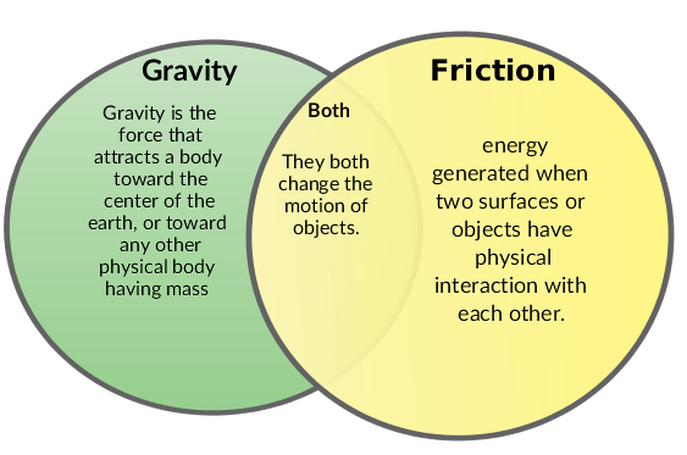
Forces such as  gravity and friction can affect the speed and direction of an object.

Force of Friction

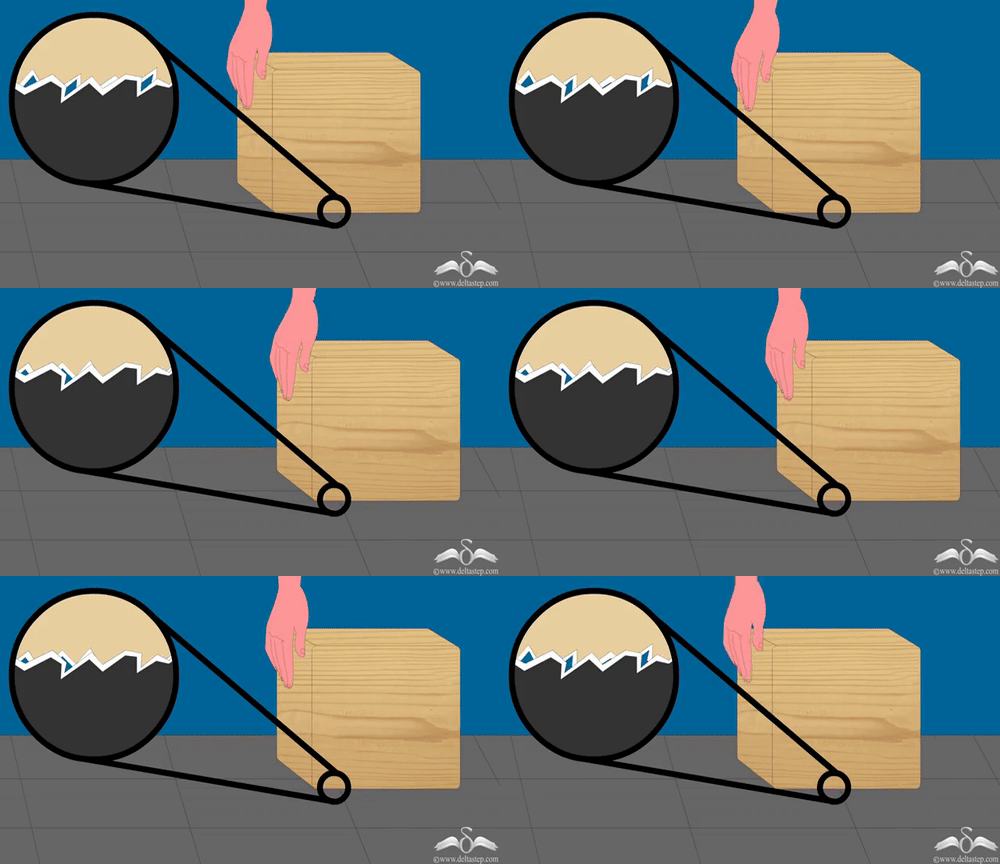
Friction is a force that occurs when one object rubs against another object causing resistance to motion.
Picture
The force of friction resists motion.

Factors that Determine the Force of Friction:

(1) the kinds of surfaces interacting.
(2) the amount force pressing the surfaces together.

Friction is a Force that Resists Motion

Friction is the force that acts to resist sliding between two surfaces that are touching. It can slow down or even stop the motion of an object.
Interactive Guide:
  1. ​What happens to the particles when the two surfaces rub together?
  2. What happens to the temperature when the two surfaces rub together?

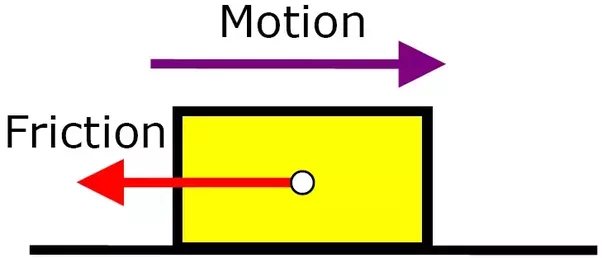
The force of friction always slows down or stops the motion of an object in the opposite direction.
Picture
Notice the force of friction works in the opposite direction as the object's motion.


​For example, friction slows or stops the motion of moving parts of machines.
Picture


​Another example would be athletic shoes with tread grooves to increase friction have better traction for starting or stopping motion than smooth-soled shoes.


​
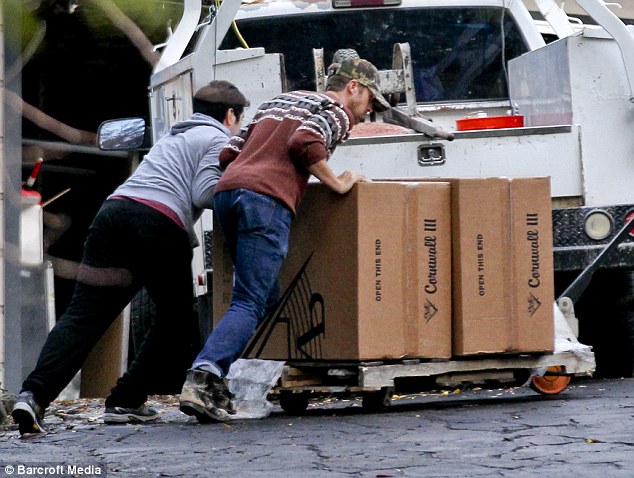
​Friction can also be the force that makes it difficult to start an object moving. Enough force must be applied to a non-moving object to overcome the friction between the touching surfaces.
Picture
Picture


​The smoother the two surfaces are, the less friction there is between them; therefore, the moving object will not slow down as quickly.


​Friction between surfaces can be reduced, in order for objects to move more easily, by smoothing the surfaces, using wheels or rollers between the surfaces, or lubricating/oiling the surfaces.
Picture
Picture
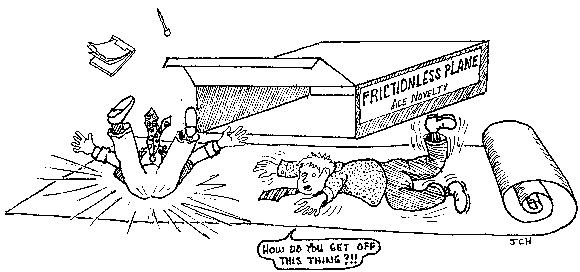
If friction could be removed, objects would continue to move forever and ever!

Types of Friction

Kinetic friction refers to the resistance created by two objects sliding against each other as the object(s) in motion. This can also be called sliding friction.
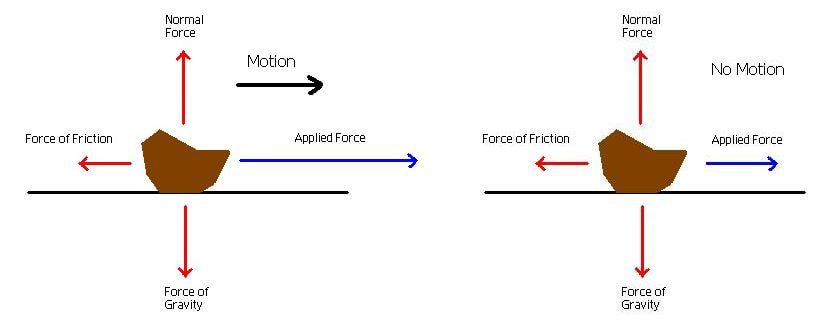
Static friction is a force that resists an applied force to an object, and the object remains at rest until the force of static friction is overcome.  Kinetic friction is different because the object is moving even though the frictional force is resisting its motion.  Static friction the object is unable to overcome the friction and is not moving.
Picture
Kinetic friction occurs when the applied force is large enough to overcome the static friction.

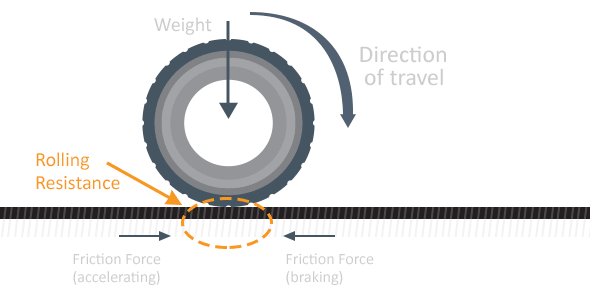
​Rolling friction
is the resistive force that slows down the motion of a rolling ball or wheel. It is also called rolling resistance. 
Picture
​
​Fluid friction
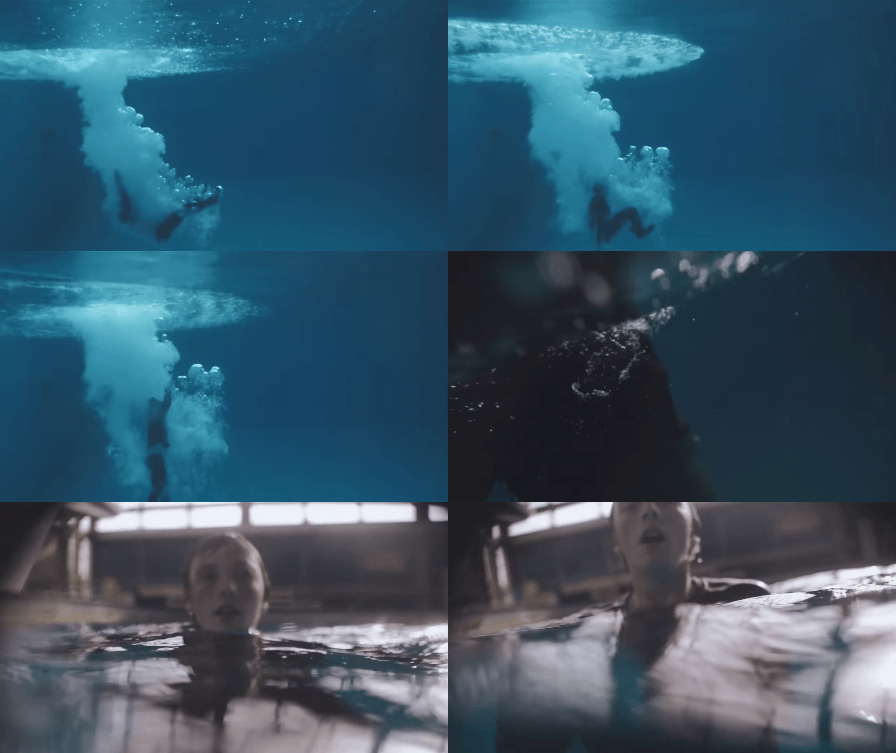
is the force that resists motion in liquids or gases.  If you've ever tried to push your open hand through the water in a tub or pool, then you've experienced fluid friction.
Picture

The Greater the Force the Greater the Friction

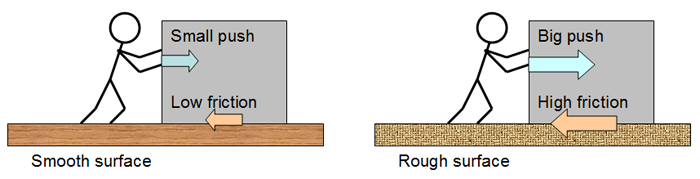
The greater the force pushing the two surfaces together, the stronger friction prevents the surfaces from moving.
Picture
  • As an object gets heavier, the force of friction between the surfaces becomes greater.
  • To move a heavy object, a greater force must be applied to overcome the friction between the surfaces.
Select Friction below to experiment with the force of friction
Interactive Guide:
  1. What happens to the force of friction when the applied force increases?
  2. What happens to the speed of the object when the friction is none?
  3. What happens to the speed of the object when the friction is "lots?"
  4. What direction is the force of friction arrow always pointing compared to the applied force?
  5. What happens to the force of friction when you add more mass?

Friction and Gravity Overview
Picture
Picture
Video Guide:
  1. ​What would happen if friction stopped working?

Topic Tips

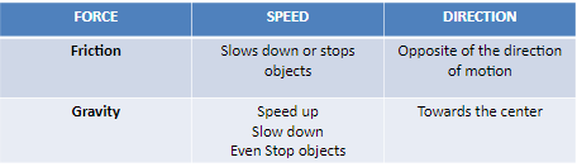
  • Friction is a force that acts in the opposite direction as the motion of an object.​
  • Friction slows down or stops the motion of an object.

    Knowledge Check

Submit
Picture

Back
Next
Powered by Create your own unique website with customizable templates.